 Written by
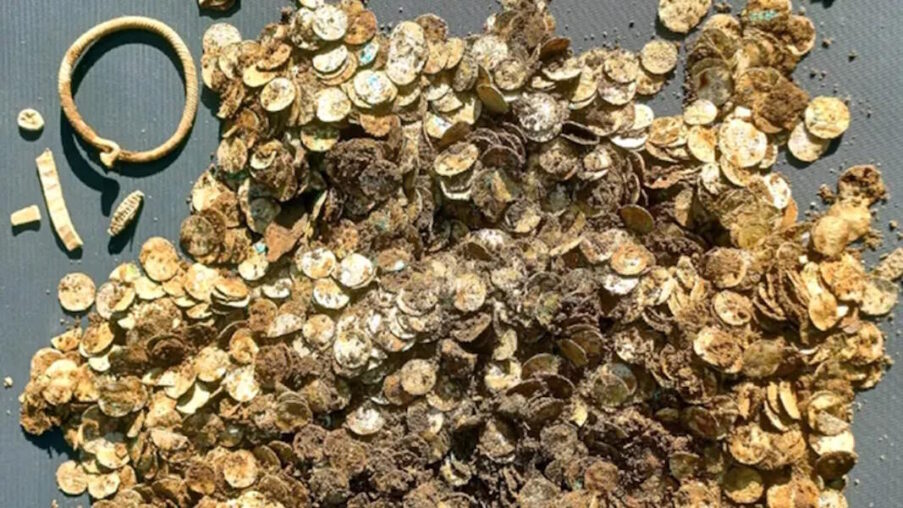
 A hoard of about 10 pounds of Viking Age silver was discovered in Sysmä, Finland. Initially discovered by metal detector hobbyist Kalle Lappinen, the later excavation was overseen by Lahti Museum’s archaeologist Esko Tikkala. The bulk of the hoard consisted of some 4,000 silver coins. Preliminary dating places the hoard at between 1050 and 1100 CE.
Once alerted by his metal detector, Lappinen dug about 18 inches to discover the first few coins. His metal detector hit again not far from the first find. Again he dug a shallow hole to find more coins. After notifying the authorities, formal inspection of the site began the next day. In addition to the coins, fragment of hack-silver, a silver bracelet, a silver charm, a silver bead and other fragments.
While Finland is not part of Scandinavia, thus not itself Viking, it is likely the silver itself was in part a result of Viking trade.
“Finland was strongly connected to the Scandinavian cultural sphere, boosted by the trade of Scandinavian seafarers—some of whom were indeed Vikings—across the Baltic Sea.” – Toni Paukku, an archaeologist at the Lahti Museum
Lappinen will likely be well rewarded due to Finland’s generous finders fee. When historic artifacts of precious metal are discovered, the Finnish Heritage Agency sets redemption price / finder’s reward equal to at least the current market value of the raw metal plus a 25% bonus.
This find It shattered Finland’s 130-year-old record previously held by the 1895 discovery in Nousiainen, Finland.
- Smithsonian magazine: A Finnish Metal Detectorist Was Shocked to Unearth a Trove of Viking Age Silver in His Hometown.
- New York Times: Hobbyist Archaeologist Uncovers Finland’s Largest Viking-Age Coin Hoard