 Written by
 The remains of ten Viking Age men were discovered about three miles south of Cambridge, England. Although buried together, the remains do not possess typical battle injuries. At least one was decapitated.
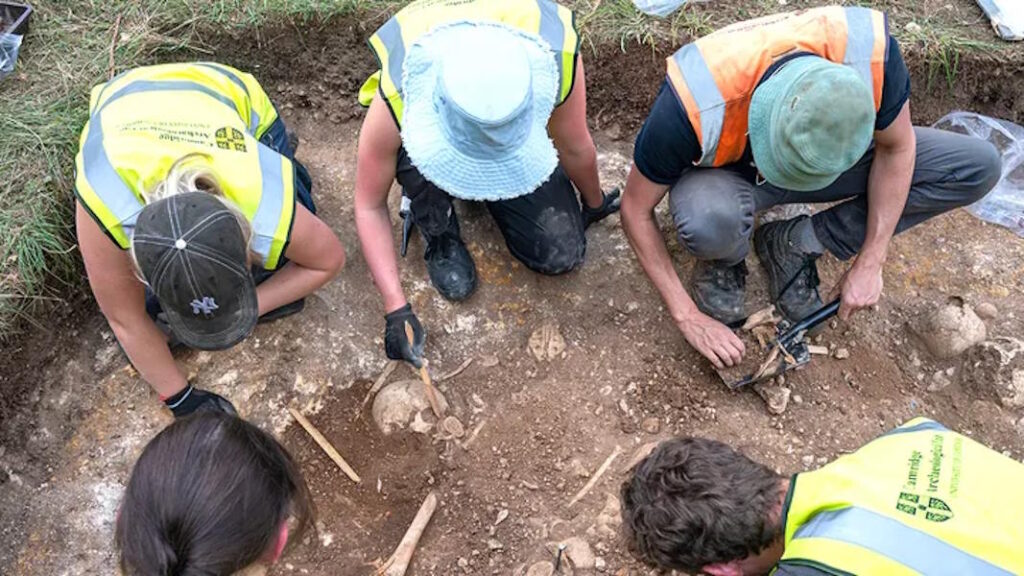
The announcement by Cambridge University came in a press release dated February 4th, 2026. Their excavations took place the previous spring and summer. The university dates the remains to the 9th century, about the time Vikings raided and settled the area. But if not a battle field grave, why were these military aged men buried together?
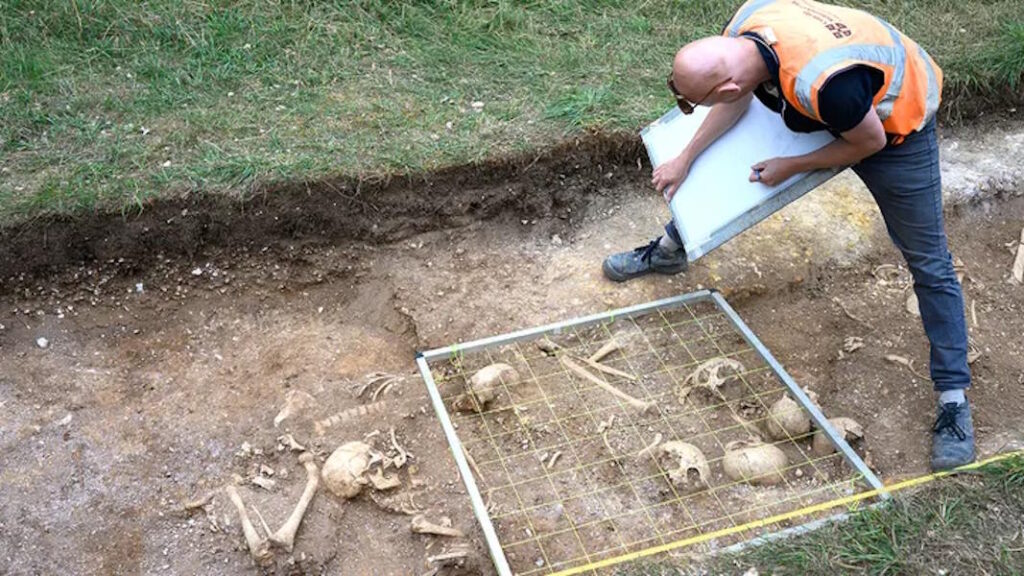
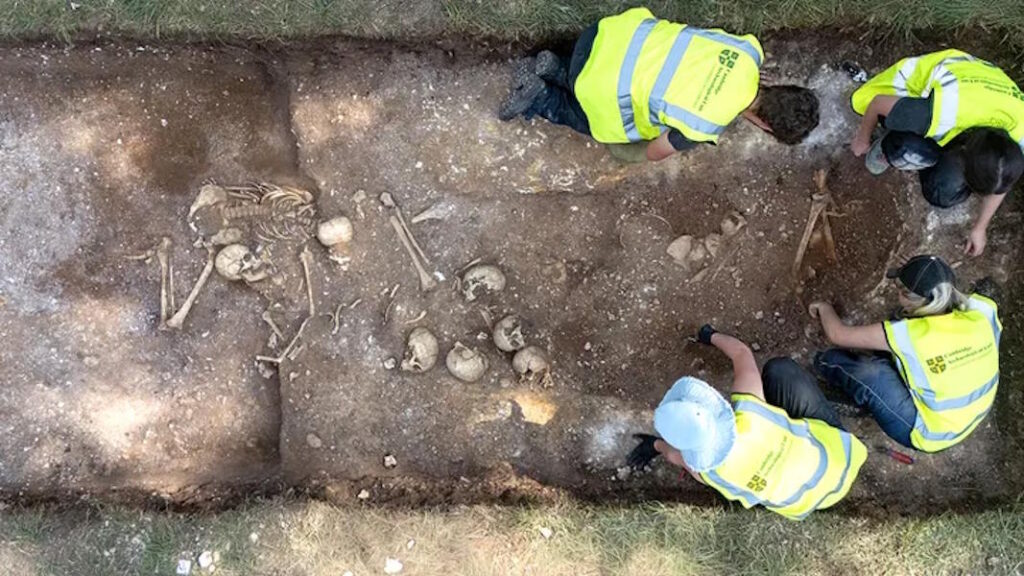
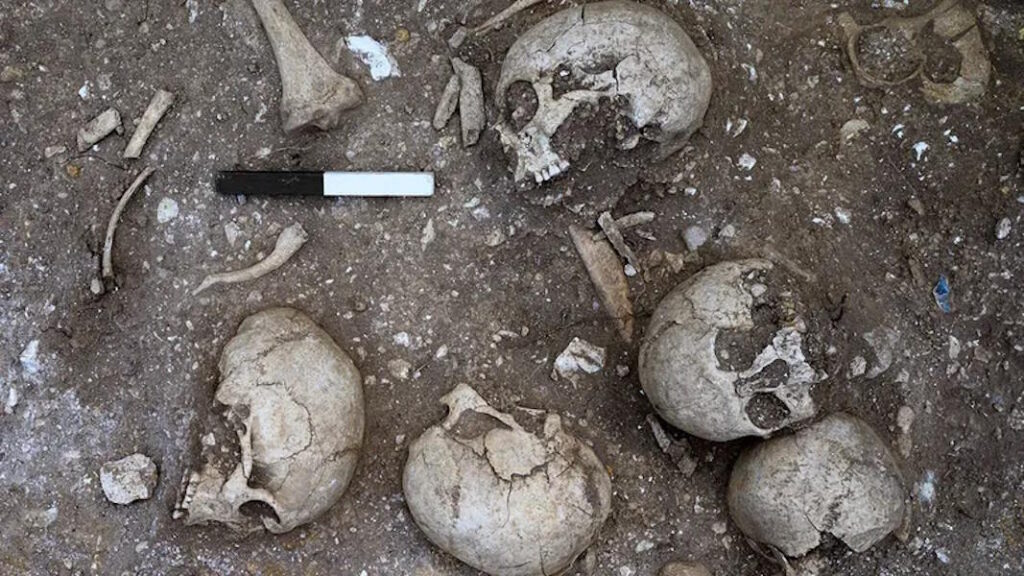
Often the lines between judicial execution and human sacrifice are blurry. Prisoners were sometimes sacrificed. Other times they were simply executed. But this mass grave had a bit of extra macabre. The bodies were dismembered and the parts were stacked neatly together by type. Skulls, legs, pelvises, and other body parts were grouped.
“The bone grouping within the burial pit is something we need to work harder on to understand further.” – archeologist Dr. Oscar Aldred
Four of the skeletons were found mostly intact. Included in the four was one which was clearly decapitated. Unlike the other six, he was buried with his severed head. One of the intact skeletons was a giant for his time, measuring 6 foot five inches while an average man’s height at the time was almost a foot shorter.
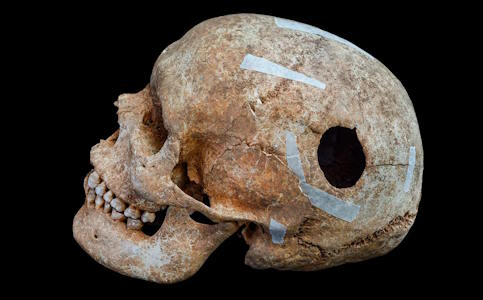
Stranger yet, the giant’s skull has a hole that had healed before he died. The hole remained, but the edges of the bone showed healing. It is hard to believe a piercing weapon made the hole and allowed the man to survive. Is it possible Vikings practiced a form of early brain surgery called trepanation?
Dr Trish Biers, curator of the Duckworth Collections at the University of Cambridge thinks yes. She speculates the hole might have been the result of surgery to remove a tumor on his pituitary gland. Such a tumor could have caused an excess in growth hormone resulting in him towering over his piers.
DNA testing is expected to determine if these men were Anglo-Saxon prisoners or captured Vikings. But why they were put to death will likely remain a mystery.